What does “original” really mean in fine art photography?
When people hear the word “photograph,” they often think of something infinitely reproducible. One click, endless copies. But in the world of fine art, photography works very differently.
A photograph can absolutely be a fine art piece. And like any fine art – painting, etching, lithograph – it can have an “original”. Let me explain what that really means.
What Is a Limited Edition Print?
In fine art photography, an original usually refers to a specific print made with archival materials, in a strictly limited number of copies.
This means:
- Printed on archival-grade paper or fine art surface
- Produced under the artist’s supervision
- Limited to a small, predetermined number, for example 10, 15, or 25 prints worldwide
- Individually numbered
- Often signed by the artist
- Accompanied by a certificate of authenticity
Once the edition sells out, no more prints are ever made. Example: a few years ago I made a linocut in a small edition of seven. It sold so quickly that I don’t even own one myself. I received several enquiries from people who wanted to buy it, but I couldn’t print more – the edition was sold out.
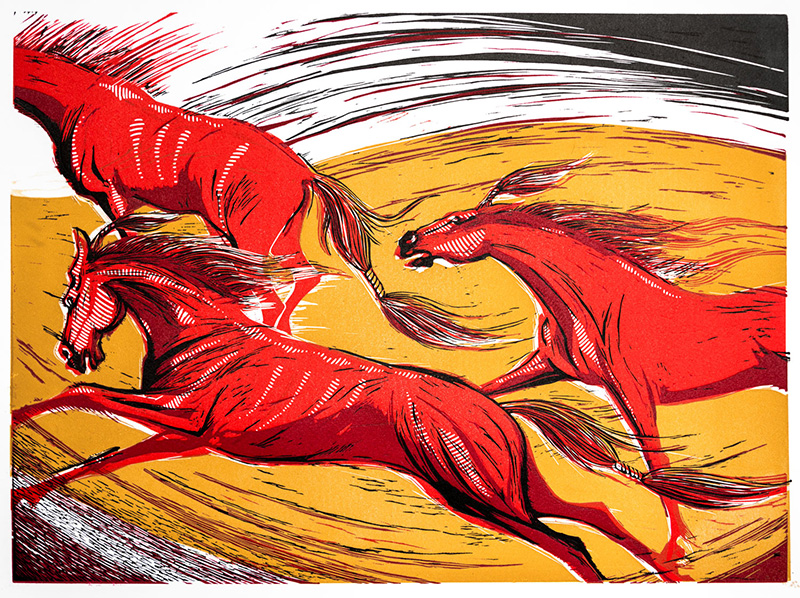
The linocut print “Fiery”. I miscalculated the edition size. Despite potential clients willing to buy, I couldn’t print more – the edition was sold out. Producing more prints wouldn’t be fair to those who had already bought theirs.
To avoid confusion and to protect collectors, many artists choose not to release their limited edition images later as open editions. If a photograph is offered as a limited edition, it remains exclusive and will not suddenly appear in unlimited quantities elsewhere.
This is similar to how the artwork of great masters functions. Take an etching by Rembrandt as an example. Only a certain number of impressions were printed from the original metal plate he created. Those impressions are the originals. A poster reproduction of a Rembrandt etching is not the same thing.
Similar principle applies to fine art photography: If an image is released as a limited edition, only a small number of collectors can ever own that specific original print. Scarcity creates value, not only financially but emotionally. It becomes something rare, something chosen. It carries financial value as well, precisely because of its rarity.
What Is an Open Edition Print?
Open editions are more common and more accessible.
In this case:
- There is no fixed limit on how many prints can be produced
- Buyers can usually choose size and finish
- The image may exist in hundreds or thousands of homes
- Open editions are often beautifully printed and perfectly suitable for decorating a space. But they are considered reproductions, not original limited fine art pieces.
They do not carry scarcity. They do not have edition numbers. They are not part of a closed series. And that is completely fine. They simply serve a different purpose.
Why the Difference Matters
The difference between open and limited editions is not about the beauty of the image. It is about context and intention:
A limited edition print is closer to a traditional fine art object. It is produced deliberately, in a controlled number, with archival materials meant to last generations. It is collected.
An open edition is more democratic. More people can enjoy the image. It is affordable and flexible. It is accessible.
They simply answer different needs.
If someone wants to invest in art, to own something rare, something that holds long-term value, they look for limited editions.
If someone wants a beautiful piece to transform their living room, open editions are perfect.
So, What Is the “Original” in Photography?
In painting, there is only one original canvas.
In fine art printmaking, the original is the limited print, hand-made by the artist.
In photography, the original is the limited, archival print defined by the artist.
That definition matters.
Because fine art photography is not infinite by default. It becomes rare when the artist decides so.
And that choice shapes how the work lives in the world.
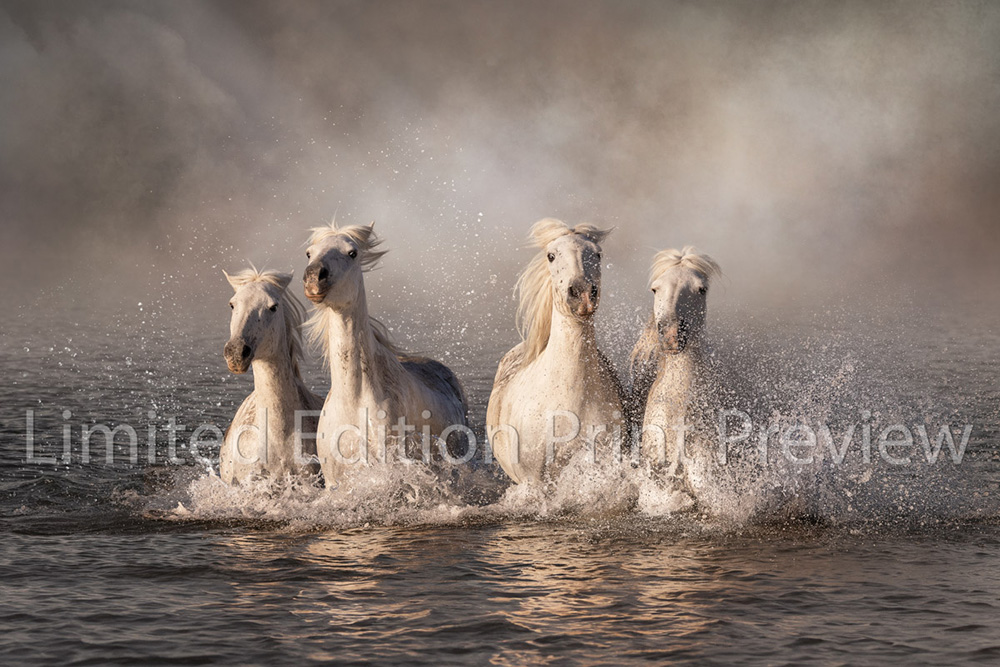
“Kelpies of Camargue” is an example of my limited edition print. Only 10 people in the world can have it on their wall (a few still available!).
If you enjoyed this article, learned something new, or it simply sparked a bit of curiosity — you’re welcome to buy me a coffee.
I’ll happily sip it while writing the next piece to share with you.