Faking it… before Photoshop
In 1902, Americans admired a proud photograph of Civil War hero Ulysses S. Grant, sitting tall on horseback at City Point. Patriotic, powerful, dignified. There was just one problem: Grant was never there. The photo was a composite—his head from one portrait, another officer’s horse and body, and a battlefield background borrowed from yet another negative. In other words, one of the most famous “fake news” photos was already more than a century old.
When people complain about “too much Photoshop,” I sometimes want to hand them a history book. Because let’s be honest: photographers have been “faking it” for almost as long as cameras have existed. Seriously. Photoshop is from 1990. Photography? 1839. That leaves a good century and a half of people scratching on negatives, painting in skies, and splicing prints together—long before a pixel was ever invented. All images in this post are from pre-digital era.
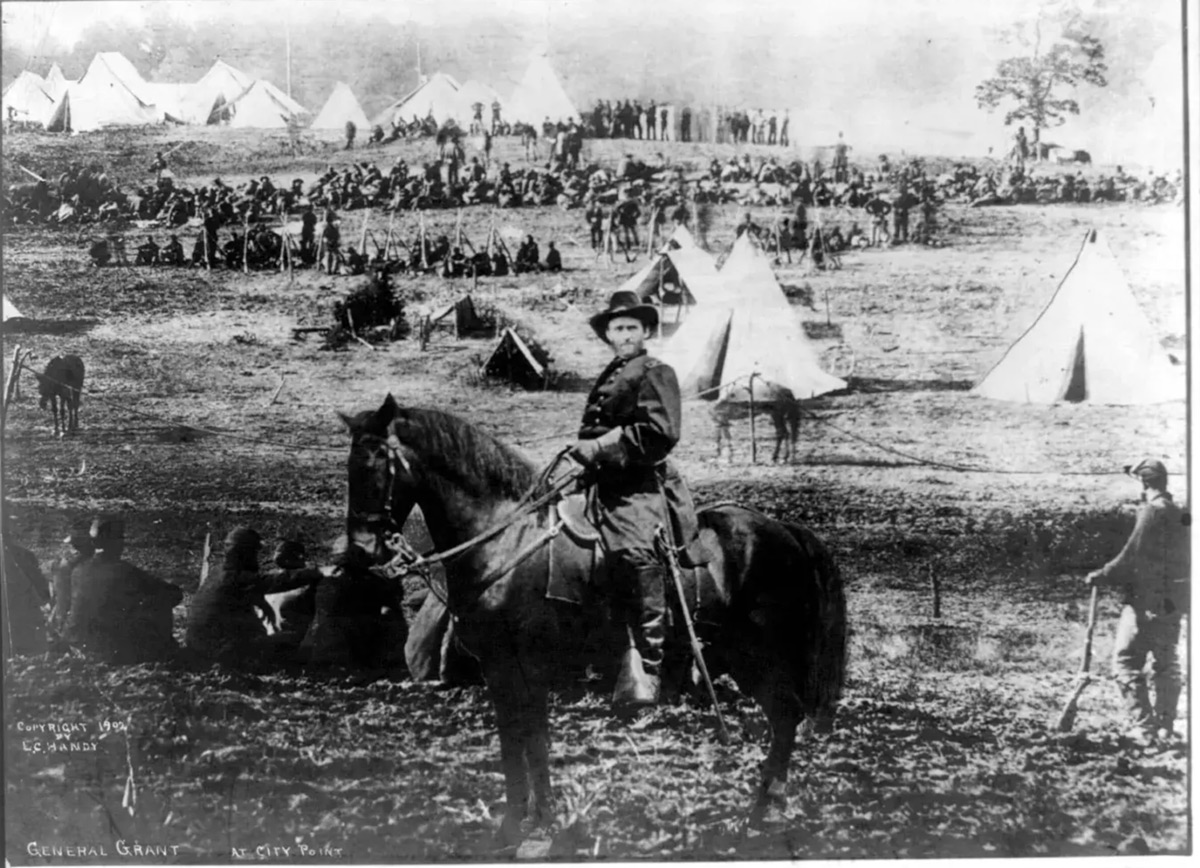
General Grant at City Point – by Levin Corbin is a composite of at least 3 photos: head of the general from the photo taken at his headquarters, body on the horse (Maj. Alexander McDowell McCook) and the and the background is from the battle of the Fisher’s Hill, Virginia.
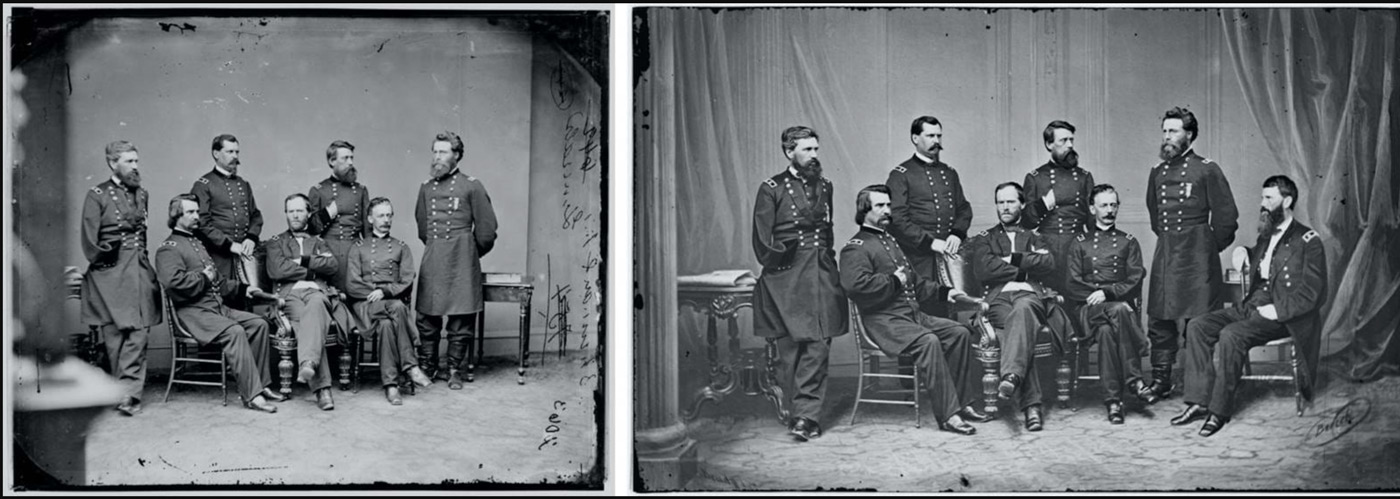
General Shermann with his Generals, 1865. General Blair was not there, so he was added later. The studio backdrop was also change for a nicer one.
Why Were They Faking It?
The reasons were surprisingly familiar:
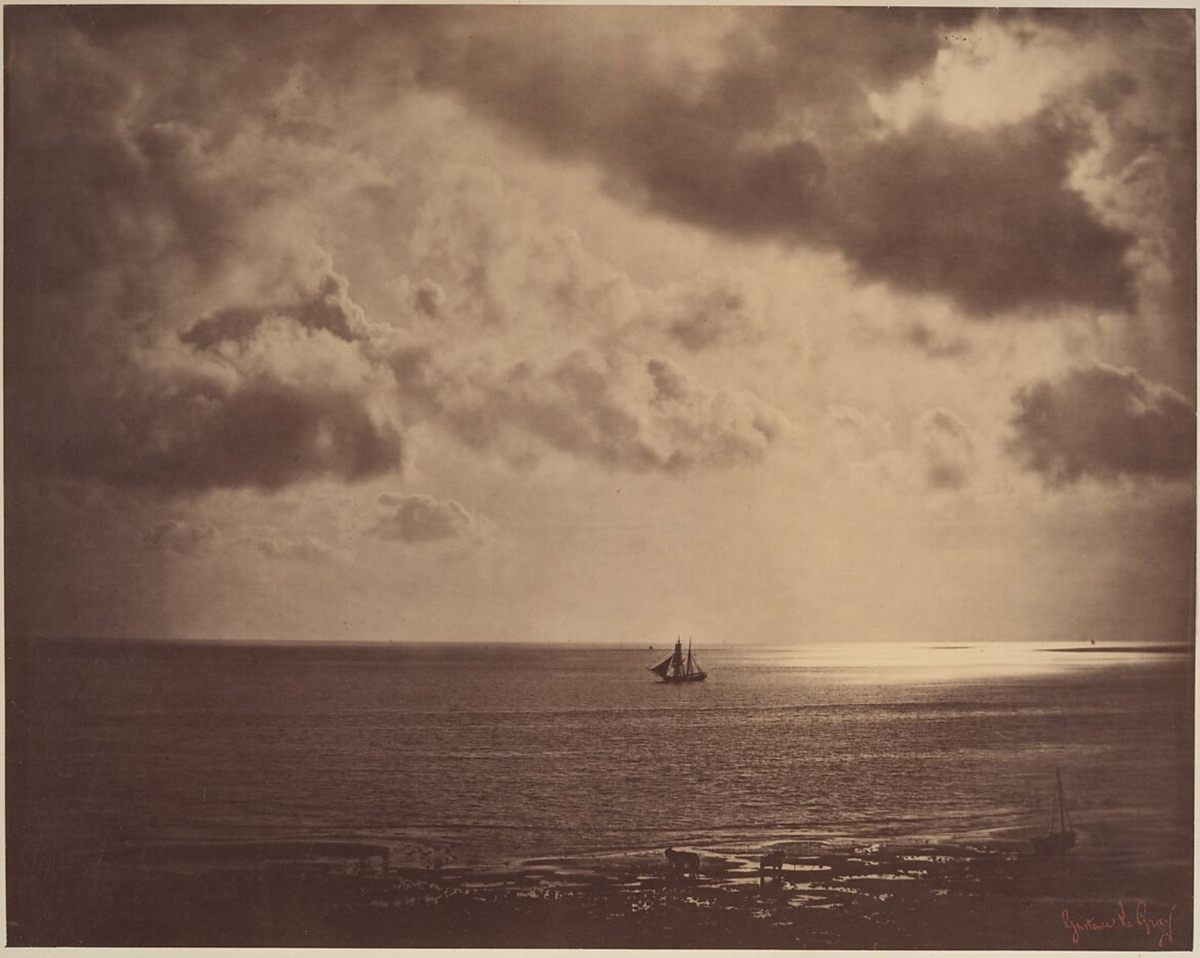
- Technical limitations – Early emulsions couldn’t cope with the brightness range of a landscape. Result: gorgeous hills… with a washed-out, blank sky. Solution? Borrow a sky from another negative and print the two together. Voilà! Instant drama. Gustave Le Gray made a career of it in the 1850s, and his moody seascapes are now considered masterpieces:
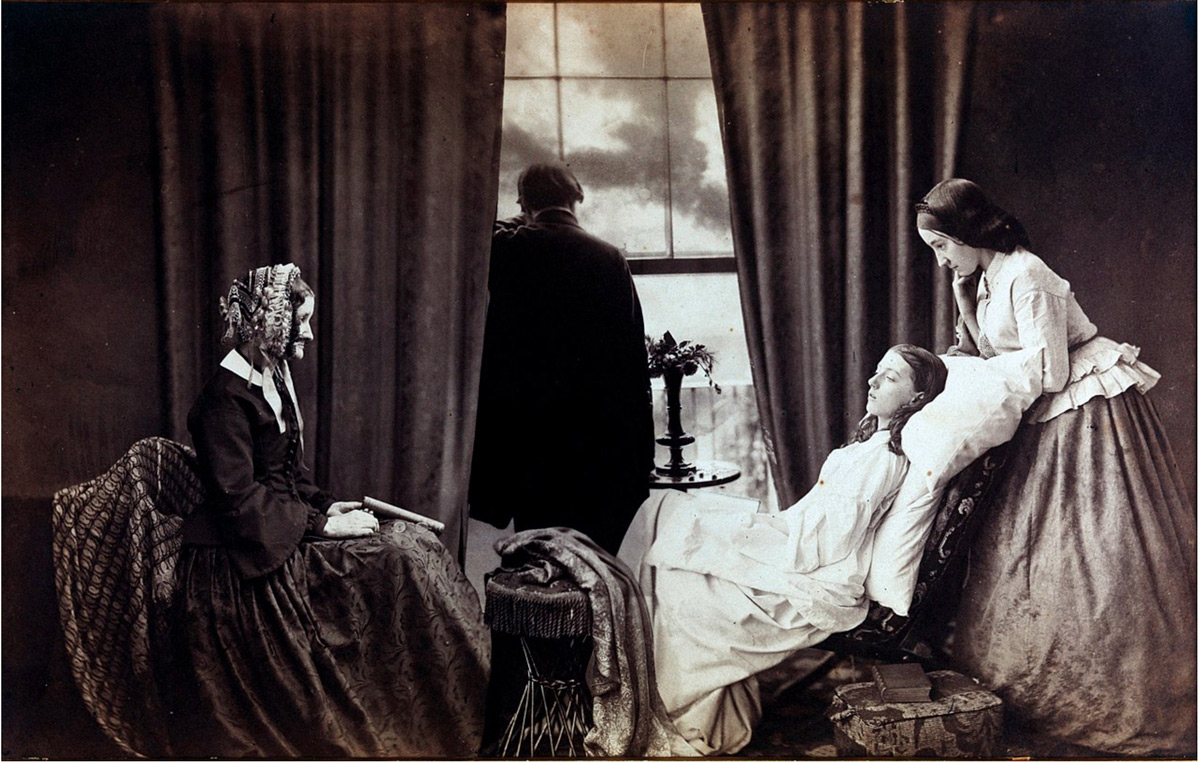
- Aesthetic ambition – Some wanted photography to rival painting. Henry Peach Robinson’s Fading Away (1858) was a sentimental scene of a dying girl, pieced together from five negatives. Morbid? Yes. Controversial? Absolutely. But also groundbreaking:
- Propaganda and persuasion – Soviet leaders were airbrushing “unreliable” comrades out of official portraits decades before Instagram “remove object” tools. And as we’ve seen, America had its own Frankenstein general. On the photo below: Canadian attempt to bend reality, and the most iconic portrait of Abraham Lincoln:
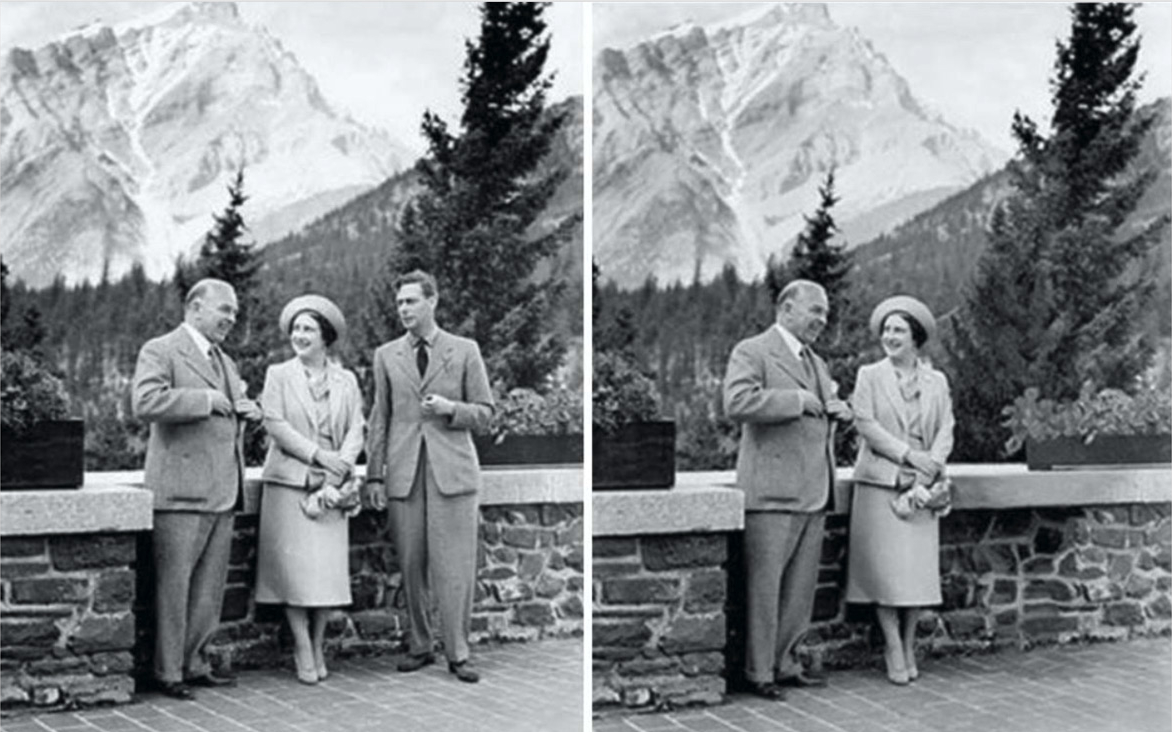
Queen Mother and the Canadian PM. To give more attention to the Prime Minister, the editor removed King George from the photo, leaving only the PM and the Queen.
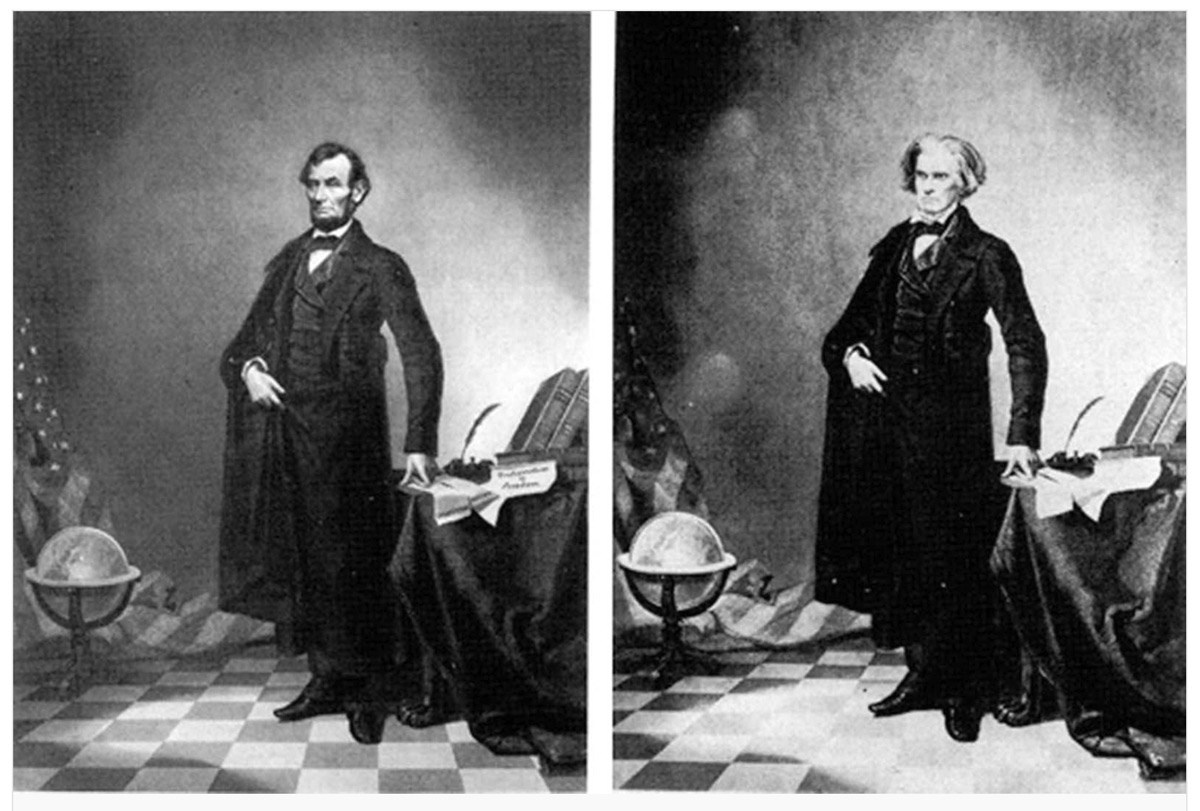
The most iconic portrait of Abraham Lincoln. It’s not Lincoln, it’s only his head, placed on a body of a Southern politician John Calhoun, who, ironically, was a supporter of views that Lincoln opposed. Apparently, Lincoln didn’t have any good pictures where he would look “heroic” enough, so they “borrowed the body from someone else.
- Entertainment – Spirit photographs, double exposures, novelty tricks… 19th-century people were basically doing TikTok filters, but with more toxic chemicals.
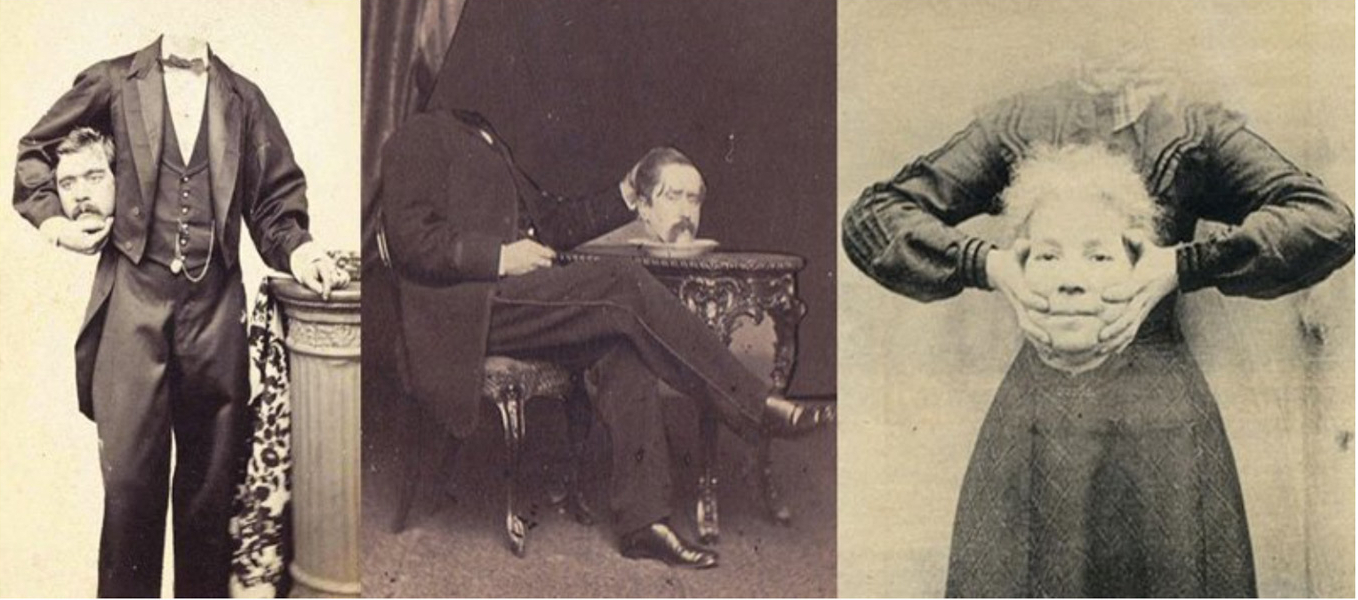
Entertainment: Headless people from the Victorian times
Adding and Removing: The Oldest Tricks in the Book
Adding and removing elements in photographs wasn’t just possible before Photoshop—it was common. Figures could be painted out of negatives, skies could be dropped in, even entire groups of people could be erased. Sometimes this was practical—removing dust spots, scratches, or a stray figure who walked into the shot. Other times it was political or artistic, reshaping reality itself. Stalin’s photo editors famously made rivals vanish from images, while artists like Oscar Rejlander and Jerry Uelsmann added figures, landscapes, and props to create elaborate tableaux. Whether subtracting or inventing, the line between “fixing” and “faking” has always been thin.
Editing Isn’t Cheating (and Ansel Adams Agreed)
There’s a persistent idea that “real photographers don’t edit.” Nonsense. Ansel Adams—Mr. Straight-Out-of-Camera himself—left pages of editing notes to his retouchers. He often didn’t do the darkroom work; he had assistants for that. And he wasn’t alone. Edward Steichen, W. Eugene Smith, Dorothea Lange—they all retouched, dodged, burned, and “faked it” in one way or another. Retouching was part of the craft, just like sharpening a chisel is part of sculpture.
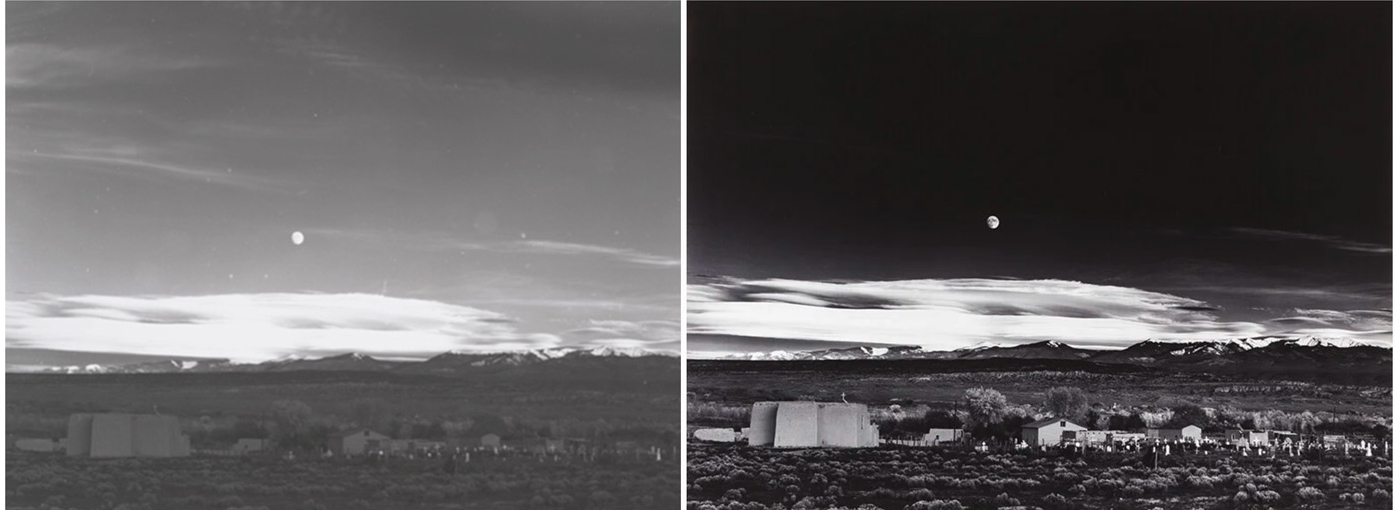
Anzel Adams “Moonrise over Hernandez” – original shot and edited.
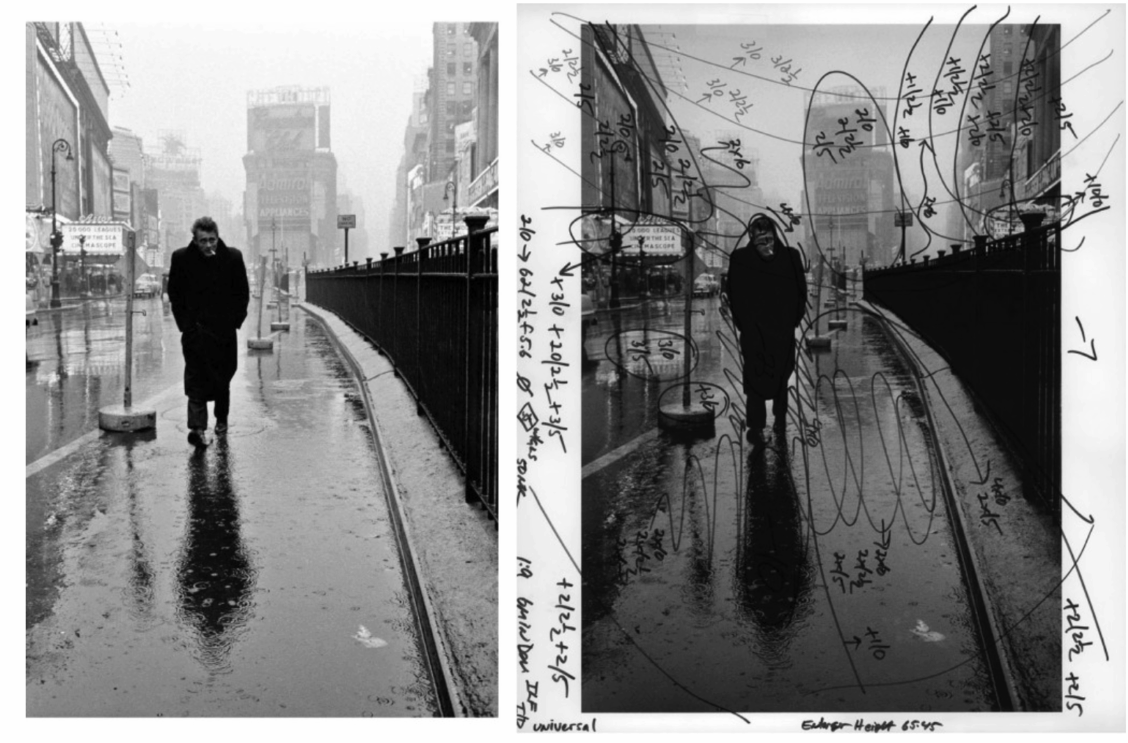
Final photo on the left, original with retouching notes on the right
The Line Between Documentary and Fine Art
Where it gets tricky is when we blur genres.
- Documentary photography – The deal here is honesty. You can crop, adjust exposure, tweak contrast, fix the white balance. Think of it as cleaning your glasses so you see more clearly. But once you start adding or removing pixels—out goes the lamppost, in comes a prettier sky—you’re no longer documenting. You’re inventing.
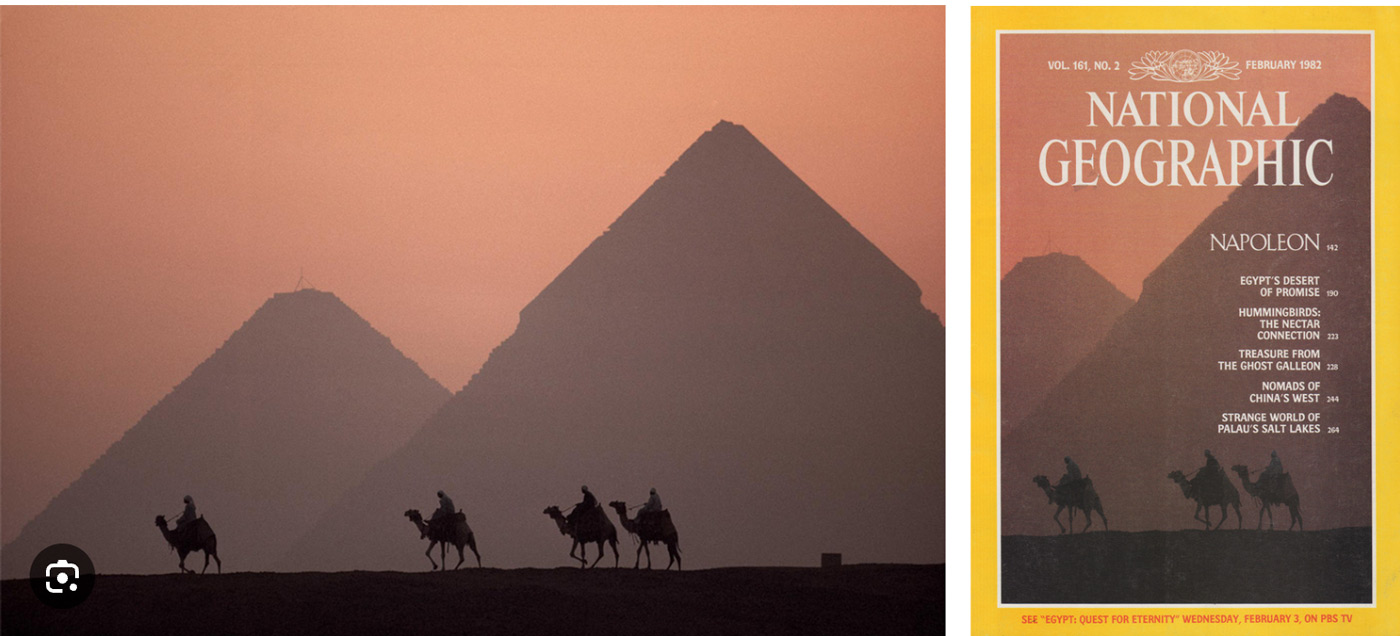
“National Geographic” moves the pyramid to fit better on the cover. Look at the point where pyramids’ edges touch, and compare oryginal photo to the magazine cover. It was not a major change – if the photographer took a few steps sideways, the perspective would have been like on the cover, but he was composing for a horizontal crop. But the fact remains – the magazine boasting to publish only “true to fact” images, faked the image for the sake of cover composition.
- Fine art photography – This is a different game. Here, manipulation isn’t just acceptable, it’s often the point. Jerry Uelsmann built entire dreamscapes in the darkroom, layering negatives until surreal, floating houses and impossible rivers appeared. Man Ray solarized and collaged his way into surrealist fame. Oscar Rejlander’s Two Ways of Life (1857) stitched together 32 negatives into one grand allegory. None of them ever pretended these were “straight” photographs.
The key is honesty about intention. A fine art photograph is closer to a painting—it’s about expression, not evidence.
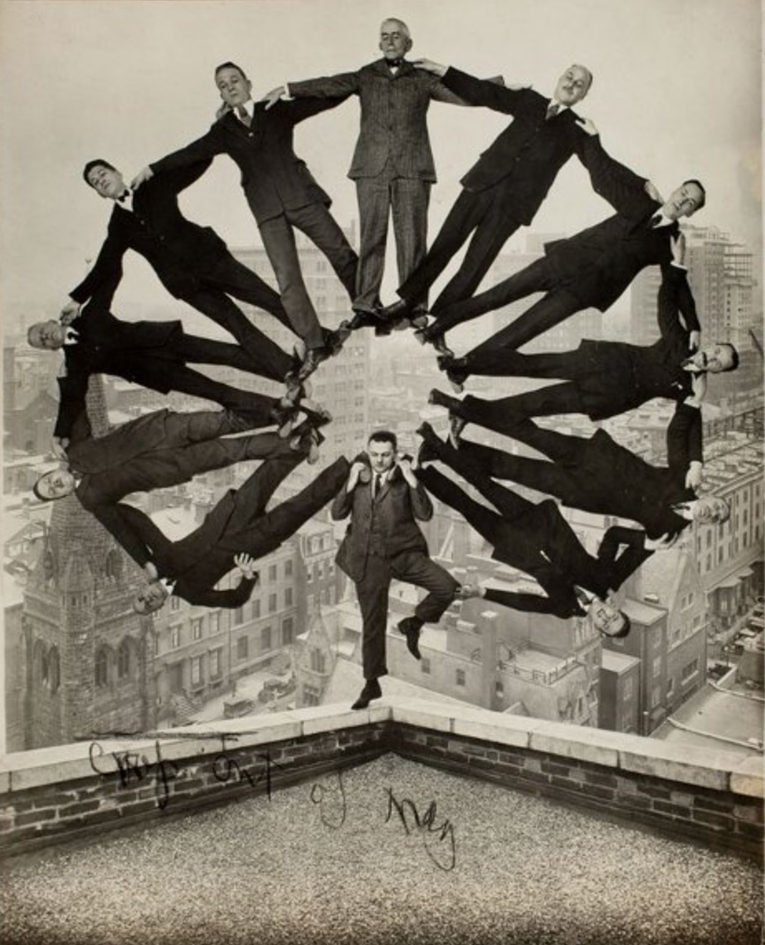
Composite image from the early days of photography
Final Thought
Editing has always been part of the photographic process—whether it’s Le Gray swapping skies, Robinson stitching negatives, or Uelsmann building dreamscapes. The trick is knowing when to keep it documentary-clean and when to let yourself paint with pixels.
Stay tuned—my next blog posts will be about my own approach to editing, and how to make the right decisions about it without losing sleep (or skies).
If you enjoyed this article, learned something new, or it simply sparked a bit of curiosity — you’re welcome to buy me a coffee.
I’ll happily sip it while writing the next piece to share with you.